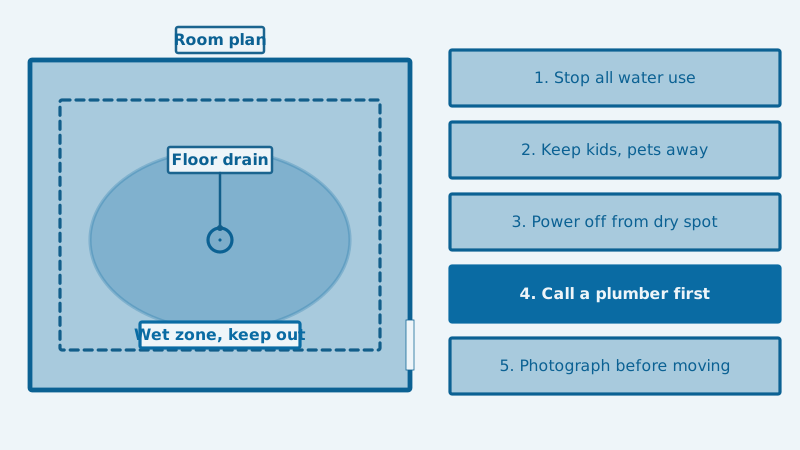
Cleaning up a sewer backup starts with stopping the source: nothing you clean stays clean while the main sewer line is still blocked. Then you protect yourself, throw out what sewage soaked, disinfect what can be saved, and dry the space within a day or two. This page is about the cleanup. For the plumbing cause, see main line drain cleaning in Los Angeles.
What is the first thing to do before cleaning up a sewer backup?
Stop using water, shut off the cause and keep people and pets out. Do not flush, run sinks or use the washer, because every gallon goes to the same blocked pipe. Have a plumber clear the line first. Cleaning while the backup continues just means cleaning twice, and standing sewage is a health hazard.
Do these in order:
- Stop all water use in the house.
- Keep children and pets away from the wet area.
- Turn off power to the affected room if water reaches outlets, and only from a dry spot. If the panel is wet, leave it and call an electrician.
- Call a plumber to clear the line. We can arrange a visit.
- Take photos and a short video of everything before you move it. That record matters if you make an insurance claim.
How do I clean up a sewer backup safely?
Wear rubber boots, rubber gloves and eye protection. CDC guidance for sewage cleanup says to throw out anything that cannot be washed and disinfected, clean hard surfaces with hot water and detergent, then disinfect, and wash up with soap and water afterward. Wash clothing you wore in hot water, separate from other laundry.
Sewage carries bacteria and viruses, so small habits matter:
- Cover cuts with a waterproof bandage before you start.
- Wear an N95 mask if the area is enclosed, since dried sewage can be stirred into the air.
- Do not eat, drink or smoke in the work area.
- Never mix bleach with ammonia or any other cleaner. Ventilate the room.
- Bag sewage-soaked items in heavy trash bags before carrying them through clean areas.
Health questions, such as what to do about symptoms, belong with a doctor. If someone in the home has a weak immune system, is pregnant, or is very young or old, consider having a restoration business do the work instead.
What has to be thrown out after a sewer backup?
Anything porous that sewage soaked usually goes: carpet and padding, upholstered furniture, mattresses, rugs, stuffed toys, books, and most paper. CDC says drywall and insulation contaminated by sewage or floodwater should be removed. Hard surfaces such as tile, sealed concrete and metal can be cleaned and disinfected.
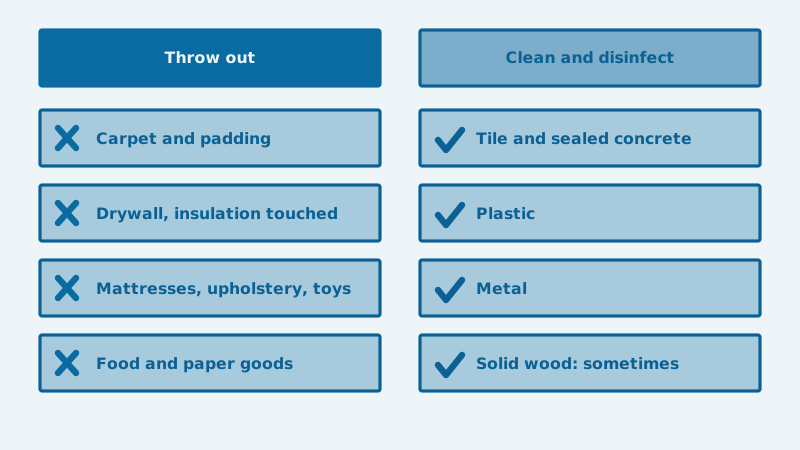
A rough guide by material:
| Material | Usual outcome |
|---|---|
| Carpet and padding | Discard |
| Drywall and insulation touched by sewage | Cut out and discard |
| Upholstery, mattresses, soft toys | Discard |
| Tile, sealed concrete, plastic, metal | Clean and disinfect |
| Solid wood furniture | Sometimes cleanable, often not |
| Food, including sealed containers that touched it | Discard |
Photograph before you discard. Keep a list of what went, with an approximate value. Do this before any adjuster visits, because insurers ask for it. Our page on whether home insurance covers sewer backup explains what usually applies.
When should I hire a restoration business instead of cleaning it myself?
Hire one if sewage covers more than a small area, if it reached drywall, carpet over a large area or a finished space, or if you cannot dry the room within 24 to 48 hours. They bring extraction pumps, air movers and dehumidifiers. Ask each company for a written quote that lists the area, the equipment and the drying days.
Restoration is separate from the plumbing. The plumber clears the line, and the restoration business cleans and dries the house. We can arrange the plumbing side. Before you sign anything, ask what is included, whether they provide a written scope, and whether the price covers drying equipment and removal. Check whether your policy has a water backup endorsement before you start work, and ask the insurer what documentation they want.
How do I get the sewer smell out of the house after a backup?
Remove the source first: sewage-soaked carpet, drywall and padding hold the smell. Then clean and disinfect hard surfaces, dry everything, and ventilate with open windows and fans. A smell that lingers after the visible damage is gone usually means something porous is still wet, often under flooring or inside a wall cavity.
Steps that help:
- Open windows and run fans to move air out, not around.
- Dry the space fast. A dehumidifier helps, and mold can start within a day or two.
- Check under floor coverings and behind baseboards for hidden dampness.
- Clean the floor drain and the trap near the backup. Pour water into any unused floor drain to refill its trap.
- Use an odor absorber such as activated charcoal after cleaning, not instead of it.
Spraying fragrance over a still-wet area only masks it. If the smell returns days later, a moisture meter reading from a restoration business finds the source. Our page on sewer smell in the house covers smells that are not from a backup.
Who pays for the cleanup after a sewer backup in Los Angeles?
It depends on where the blockage was. If the cause is in your private sewer lateral, the pipe from your building to the city connection, LA Sanitation says you maintain and repair it, and your insurance, if you have water backup coverage, may cover the damage. If the city main failed, ask LA Sanitation, whose Customer Care Center, 1-800-773-2489, is open 24 hours a day.
Standard California homeowners policies generally do not cover sewer backup unless you added an endorsement. California requires a denial to be in writing with the reasons stated, and the California Department of Insurance can review a claim you believe was wrongly denied. Keep receipts for temporary repairs.
Want the plumbing side arranged? Request a written price. Our home page lists what else we arrange.
Questions people ask
How long does sewer backup cleanup take?
A small area can be cleaned in a day, but drying often takes two to five days with equipment. Large or finished spaces take longer, because walls and floors may need to be opened. Ask the restoration business for a schedule in writing.
Can I use bleach to clean sewage?
Bleach can disinfect hard, nonporous surfaces after you clean them with detergent and hot water. Follow the bleach label, and never mix bleach with ammonia or other cleaners. Carpet and drywall that sewage soaked are usually discarded rather than cleaned.
Is it safe to stay in the house after a sewer backup?
Stay out of the affected rooms and keep kids and pets away until the area is cleaned and dry. If the backup is small and contained, many people stay in unaffected rooms. If sewage is widespread, or someone is vulnerable, stay elsewhere while it is handled.
Will the sewer backup happen again?
It can, if the cause was not fixed. Have the plumber run a camera pass to find whether roots, grease or a damaged pipe caused it. A backwater valve and a cleanout can reduce risk. See our guide to preventing sewer backup.
Sources used
- CDC, Guidelines for Cleaning Safely After a Disaster
- California Department of Insurance, Residential Property Claims Guide
- LA Sanitation, Managing and Protecting LA's Underground Sewer System
- Published sewage cleanup pricing from Los Angeles area restoration businesses, checked November 2026
Page updated