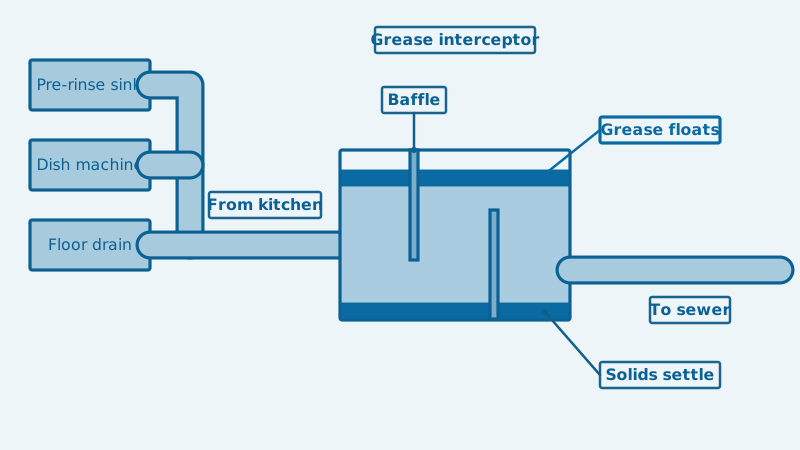
Commercial drain cleaning is the clearing and maintenance of the drains in a business: kitchen grease lines, floor drains, restroom branches and the building's sewer lateral. Grease is the main cause in food businesses, so the work is usually hydro jetting with a camera check rather than a quick snake. A visit is arranged for the building, with access to cleanouts, and the quote is written before any work starts.
What does commercial drain cleaning involve?
A commercial job starts with finding which line is slow, then cleaning it from the nearest cleanout with a cable or a hydro jet. For kitchens, the jetter strips grease from the wall of the line running to the interceptor or the sewer. A camera run before and after shows the result, and floor drains are cleaned and flushed as part of the visit.
Commercial lines are larger, longer and shared. One kitchen can have several floor drains, a pre-rinse sink, a dishwasher line and a hand sink, all feeding a single grease line. A restroom block in a shop may share a lateral with the next unit. The operator needs the building plan or a camera to know which line serves which fixture.
Cleaning is not the same as pumping a grease trap or interceptor. Pumping and hauling the contents is a separate service with its own rules. We arrange drain cleaning visits, and the interceptor is something to coordinate with whoever services it.
What city rules apply to restaurants and grease?
In the City of Los Angeles, food service businesses that discharge grease are under LA Sanitation's fats, oils and grease program, set out in Los Angeles Municipal Code section 64.30. LA Sanitation lists an industrial wastewater permit, required best management practices, and a grease interceptor for new construction and for businesses that cause grease related sewer spills.
The details change, so read the city's current page, or ask the building owner or a code consultant. Other parts of Los Angeles County have their own programs: LA County Public Works publishes restaurant pretreatment guidelines for the areas it covers, and a business outside the city limits should check which agency applies.
Industry guides often say interceptors must be cleaned before grease and solids reach a quarter of the liquid depth, but confirm the figure with your own permit conditions. Records of cleaning and hauling matter at an inspection, so ask for paperwork after each visit. See also our page on commercial sewer cleaning.
What affects the price of commercial drain cleaning?
Published regional guides put commercial hydro jetting at roughly $500 to $1,500 per visit for a typical restaurant grease line, with complex jobs reaching $2,500 to $3,500 in some guides. Basic commercial snaking can cost much less. Prices vary by region, so the written quote after a visit is the figure to use.
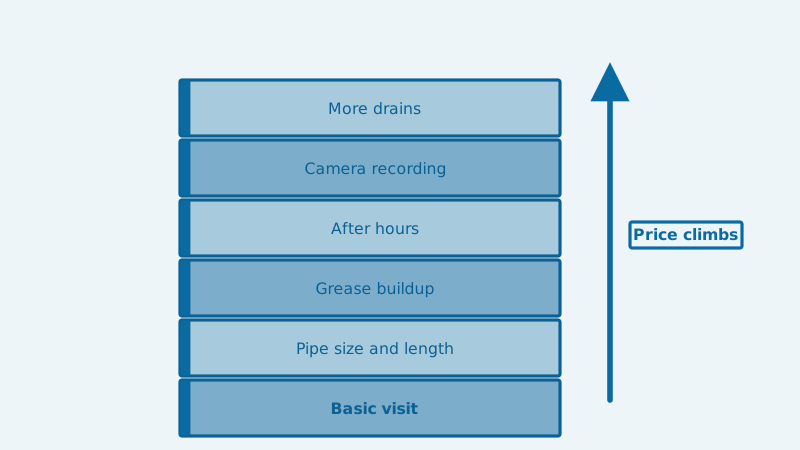
What moves the price:
- Pipe size and length. Four inch lines and a long run cost more than a short branch.
- Grease buildup. A line cleaned monthly is quick. One that has not been touched in a year is not.
- Time of day. After hours work, which many kitchens need, is often priced higher.
- Camera. If a recording is not bundled, it can add a few hundred dollars.
- Number of drains. A visit covering the main line and several floor drains costs more than one line.
For comparison, residential jetting runs about $350 to $900 in national guides. See hydro jetting cost for the home version.
What are the signs a business needs drain cleaning?
Slow floor drains, gurgling from sinks when the dishwasher drains, a sour smell around the kitchen, repeated overflow at the same drain and an inspector's note are the main signs. In a food business, drains clogging more than once in a month point to grease buildup upstream, not a one-off object.
In offices and shops the signs differ: a restroom stall that backs up when the next one flushes, a floor drain that bubbles, or a smell near the cleanout. If several tenants share a lateral, the cause may be outside your unit. A camera run shows where the problem is. If sewage is coming up, read about emergency sewer drain cleaning.
Can commercial storm drains be cleaned the same way?
A storm drain is a separate system from the sanitary sewer, and what goes into it is regulated. Los Angeles Municipal Code section 64.70.02 bars untreated runoff containing grease, oil and automotive fluids from the storm drain system, and 64.70.03 prohibits non storm water discharges. Washing grease or kitchen mat water into a storm drain is not allowed.
Clearing a catch basin of leaves and silt is ordinary maintenance. Dumping wash water or waste into it is a violation. The 888-CLEAN-LA hotline takes reports of illicit discharges and clogged catch basin inlets, and a property owner with a persistent storm drain problem can use it. Ask about disposal of any waste that comes out of a basin before work starts.
What about commercial drain cleaning products and brushes?
Commercial strength drain cleaners are caustic or acid products that are riskier than the household version, and they do not reach a clog in a long grease line. Enzyme and bacterial products can help keep a kitchen line from building up, but they work slowly and do not replace jetting. A floor drain brush is a helpful routine tool.
For floor drains, a stiff drain brush and a strainer basket cleaned daily keeps solids out. For kitchen lines, a scheduled jetting visit does more than a bottle of product. If a cleaner has been used, tell the person who arrives. See chemical drain cleaning for the risks of mixing.
Return to the LA Drain Works home page for other services, or send a quote request.
Questions people ask
How long does commercial drain cleaning take?
A single grease line with a camera check is often a short visit, and a building with several floor drains takes longer. Time depends on line length, access and how heavy the buildup is. Ask for an estimate with your quote. Many food businesses schedule the work after closing.
What should I ask before I hire someone for commercial drain cleaning?
Ask for a written quote, whether a camera recording is included, how grease and waste are handled, whether they carry insurance and whether they provide paperwork for inspections. Ask what happens if the line fails again soon, and whether after hours work costs more.
Do I need to be on site for commercial drain cleaning?
Someone with keys and authority needs to give access to the kitchen, cleanouts and sometimes the roof or basement. You do not need to watch the job, but a manager should be reachable for approvals. Tell staff in advance so floor drains are clear.
How often should a restaurant have its grease line cleaned?
There is no single rule. Heavy fryer and dishwasher use calls for more frequent cleaning than a light kitchen. Many kitchens clean monthly or quarterly, and your permit may set the interval for the interceptor. Use the camera recording to decide.
Does commercial drain cleaning include grease trap pumping?
Usually not. Cleaning the line and pumping the trap or interceptor are different jobs, often done by different businesses. Ask which one you are quoting for. LA Sanitation's program covers the interceptor, so keep your hauling records with your permit.
Sources used
- LA Sanitation, industrial waste pretreatment requirements (fats, oils and grease program, LAMC 64.30)
- Los Angeles Municipal Code, sections 64.70.02 and 64.70.03, discharges to the storm drain system
- LA County Public Works, restaurant pretreatment guidelines
- HomeGuide, hydro jetting cost (2026)
- Published 2026 regional price guides for commercial hydro jetting and grease line cleaning, checked November 2026
Page updated