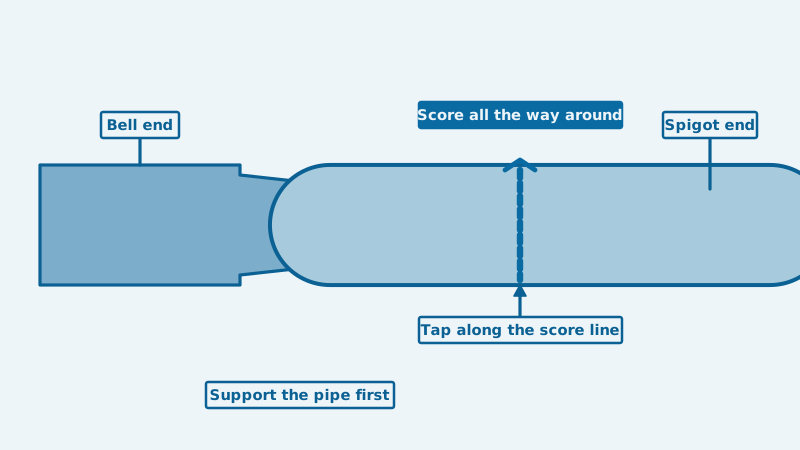
Cut clay sewer pipe with a snap cutter, also called a chain cutter. It wraps a chain of cutting wheels around the pipe and squeezes evenly until the wall breaks along the line you marked. Clay is hard but brittle, so a hammer and chisel or a hard-driven saw will often crack it past the cut. If your line runs under a yard or street, read this page first, then see our overview of drain cleaning in Los Angeles for who to call when the job is bigger than one cut.
What tool cuts clay sewer pipe best?
A snap cutter is the best tool for clay pipe because it loads the wall evenly all the way around and breaks it cleanly. Rental yards usually stock one for up to 6 inch pipe, which covers the 4 inch lateral most houses have. An angle grinder with a diamond blade also works but makes a cloud of dust.
Your options, in the order most people prefer them:
- Snap cutter. Clean, quick, low dust. Needs a few inches of working room around the pipe.
- Diamond blade on a grinder. Accurate, but it throws fine dust and needs a firm hand.
- Reciprocating saw with a carbide or diamond blade. Slow, and the vibration can crack brittle clay before the cut is through.
- Hammer and chisel. Last resort. It leaves ragged edges and often a crack running up the barrel.
If you are cutting cast iron rather than clay, the same snap tool applies, and our page on how to cut cast iron drain pipe covers the differences.
How do you cut clay sewer pipe step by step?
Expose the pipe, mark one straight line, set the chain square to the pipe, tighten until snug, then ratchet slowly until it pops. Support the pipe on both sides first. Clay is heavy and a cut pipe that drops can break the joint behind it. Cut the pipe at a sound spot, not through a crack.
The sequence:
- Dig clear. Leave room to work all the way around the pipe, and shore the sides of any hole deeper than a few feet. Deep trench walls can collapse.
- Find sound pipe. Cut at least a foot or two away from the damage, in a barrel of pipe with no cracks. Do not cut across a joint.
- Mark a square line. Wrap tape around the pipe and mark along its edge so the line closes on itself.
- Support the pipe. Put blocks or a sling under both ends of the cut.
- Set the cutter. Chain on the line, wheels against the clay, tool at a right angle to the pipe. Take up the slack so the chain is snug and not twisted.
- Ratchet slowly. Work the handle in small strokes. The pipe will click and pop. On larger pipe you may need to move the tool around and repeat.
- Check the ends. Chip off any burrs and make sure the cut ends are clean and round.
Practice on a spare piece first if you can. A bad cut costs you another foot of pipe, and on a buried line every foot is more digging.
How do you join cut clay pipe to new pipe?
Use a shielded coupling, a rubber sleeve inside a stainless steel jacket with clamps, sized to the outside diameter of both pipes. Clay is often a different outside diameter from plastic, so measure both before buying. Slide it on loose, leave a gap of an inch or less between the ends, center it, then tighten the clamps evenly.
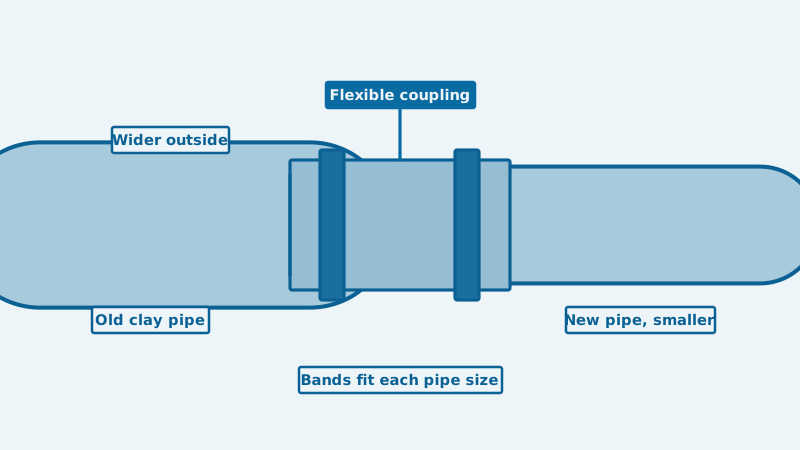
A plain rubber coupling without a shield is meant for above ground use. A buried sewer line moves, so it needs the shield. Many plumbers also bed the new pipe in sand or pea gravel and keep the pipe ends level so the coupling does not carry a load.
When the new section is long, or when it joins a line that has dropped or sagged, a coupling cannot fix the grade. A drain that does not fall steadily toward the street will collect solids, and the fixtures upstream will keep backing up.
Join the old and new pipe only as the plumbing code allows. Local rules can require specific materials and a permit and inspection, and the person who cuts into the lateral is expected to follow them.
Is cutting clay pipe dangerous?
It can be. Clay contains silica, and cutting or grinding it makes fine dust that you must not breathe. OSHA describes respirable crystalline silica as a cause of silicosis, an incurable lung disease, as well as lung cancer and other illness. Cut wet where you can, use a snap cutter in preference to a grinder, and wear a respirator rated for fine dust.
Other hazards are less talked about:
- Sewer gas and sewage. An open line can release gas and splash waste. Wear gloves and eye protection, and work with air moving.
- Trench collapse. A hole deeper than a few feet needs shoring or a sloped wall.
- Pipe weight. A length of clay is heavy. Support it before you cut, and lift with your legs.
- Utilities. Know where gas, water and power lines run before you dig, and call before you do.
If the line is backed up when you cut it, wait. Cutting into a full line floods the hole.
When should I leave it to a professional?
Leave it to one when the pipe is under concrete or a driveway, deeper than you can dig safely, outside your property line, or when you do not yet know what is wrong with it. The owner is responsible for the whole lateral, including the part beneath the street, according to Los Angeles County Public Works.
Work in the public right of way is a separate matter. In the City of Los Angeles, repairs to the house connection there need a permit issued to a contractor who holds the right bond, which a homeowner cannot take out. The state contractors board lists plumbing, sanitation system, pipeline and general engineering contractors as the classes allowed to install or repair building sewers.
Cutting is rarely the whole answer anyway. Clay that is cracking in more than one place usually means the whole run is tired. Our guide to repairing clay sewer pipe covers what to do instead, and old clay sewer pipe explains why it fails.
A quote request is the quickest way to get a camera look and a written price. We arrange a local drain cleaner who comes to you, and nothing happens until you say yes.
Questions people ask
Can I cut clay sewer pipe with a hacksaw?
Not well. A hacksaw blade will not cut hard fired clay, and an ordinary reciprocating blade dulls fast. A snap cutter is cheaper in the long run because it makes a clean cut in seconds. If you must saw, use a carbide or diamond blade and cut slowly, wet if you can, with a dust mask.
What size clay sewer pipe do most homes have?
A 4 inch pipe is the usual size for a house lateral, with 6 inch common where a building has a larger drain. Always measure the outside of your own pipe, because clay pipe is sold by nominal inside size and the outside varies. You need the outside diameter to pick the right coupling.
Can you connect clay pipe to PVC?
Yes. Use a shielded transition coupling sized to both outside diameters, with the stainless band tightened evenly. For a buried line, support the pipe on a firm bed so the joint does not carry weight. Check local code first, because some places require a particular fitting or an inspection.
Do I need a permit to cut and replace a section of sewer pipe?
Often yes. In Los Angeles, plumbing work on private property generally needs a plumbing permit, and work on the lateral in the street needs a separate permit for a bonded sewer contractor. Rules and fees change, so check with the city before you dig.
What is the sign that clay pipe needs more than a cut?
Roots at several joints, slow drains and backups that return after cleaning, a sagging or offset section on camera, or more than one crack are the warning signs. One break in an otherwise sound pipe can be spot repaired. A tired pipe needs lining or replacing. See trenchless pipe replacement.
Sources used
- OSHA, respirable crystalline silica
- Vitrified clay pipe, material and properties
- CSLB, Building Official Information Guide, who may install or repair building sewers
- Los Angeles County Public Works, Sewer: owner responsibility for the lateral
- Published tool and coupling instructions from several pipe tool and plumbing sources, checked November 2026
Page updated