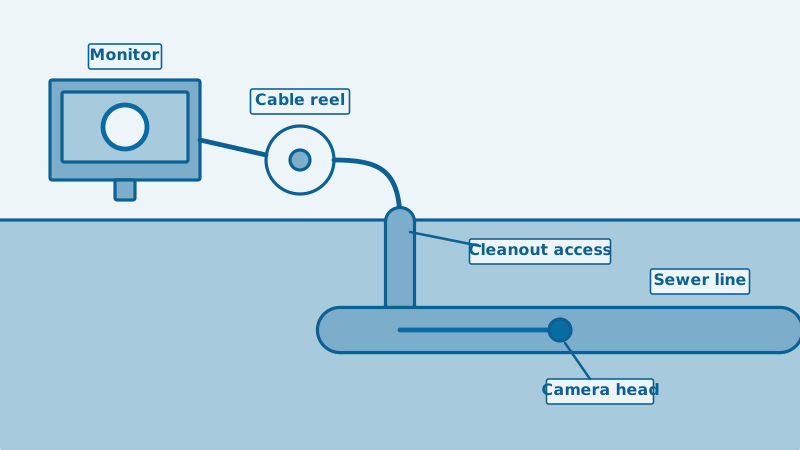
A sewer camera inspection runs a waterproof, lit camera on a flexible cable through your sewer line, usually from the cleanout, and records what it sees. It can identify roots, cracks, offset joints, a sagging section, grease, scale and collapse. When the line has been checked, the next step is a decision based on a picture, not a guess. Our page on the sewer camera with locator covers the equipment that marks the spot above ground.
Is a sewer camera inspection worth it?
Yes, in four cases: you have repeat clogs, you smell sewage, you are buying an older house, or you are planning any repair. A camera inspection shows the actual condition of the pipe, so you do not pay for the wrong fix. It is less useful for a newer line with no symptoms.
What it saves you from:
- Guessing at a clog. If roots, a belly or a cracked joint is the cause, clearing the line again just buys time.
- Repairs you do not need. A line that looks sound on camera may need only cleaning.
- Surprises after a purchase. Los Angeles city rules do not appear to require a sewer lateral inspection when a home is sold, as far as we could find, so the buyer's inspector may not look at the line unless you ask. Check with the city for the current rules.
- Digging in the wrong place. With a locator, the crew marks the problem and digs only there.
In older neighborhoods the case is stronger. Lateral pipes from earlier decades may be clay, cast iron or Orangeburg. Orangeburg, a fiber pipe common until the 1970s, often fails early. A camera is how you find out which one you have and what shape it is in.
What does a sewer inspection consist of?
A technician opens the cleanout, feeds the camera down the line, and watches the live picture while marking the distance of anything unusual. The run is usually recorded. The business then explains the findings, shows you the footage, and says what, if anything, needs doing. Some add a locator survey to mark depth and position.
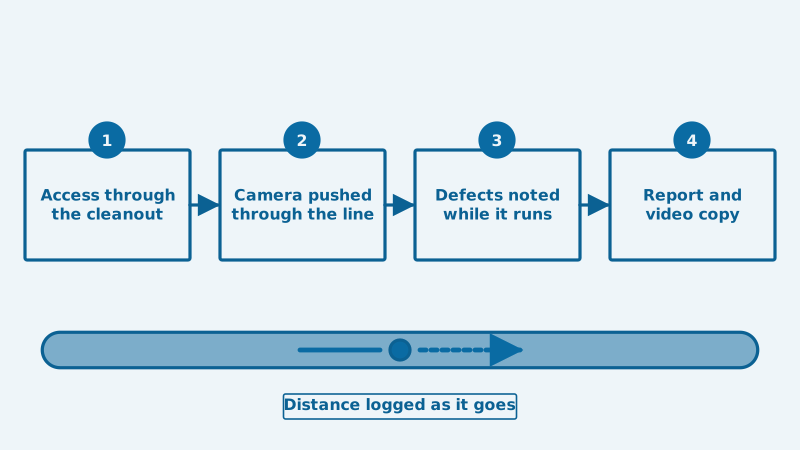
A typical visit runs like this:
- Access. The technician finds the cleanout. If there is none, a toilet may have to be pulled, or a roof vent used, which adds time and sometimes cost.
- Clearing, if needed. A line packed with debris or roots may need clearing before the camera can pass, so the camera can see the pipe wall.
- The run. The camera goes toward the street connection while the technician calls out and records what is seen.
- Marking. If a locator is used, the technician marks defects above ground and notes the depth.
- Review. You see the footage, with distances noted. You get the recording, and a written note of what was found.
What a good inspection identifies: roots at joints, cracks and breaks, offset or separated joints, a belly where water pools, scale and corrosion, grease buildup, a collapsed section, and connections from other lines.
How long does a sewer scope inspection take?
A standard residential camera run through an accessible cleanout often takes under an hour. Add time for setup, for clearing if the line is blocked, and for a locator survey. A long lateral, no cleanout or heavy debris can stretch the visit to a couple of hours. Ask the business how long it expects.
What adds time:
- No cleanout, so a toilet is pulled and reset
- A line that needs clearing before the camera can pass
- Roots or an offset that stops the camera
- A very long run, or access from both ends
- A locator survey across the yard
What keeps it short: an open cleanout, a clean line and a lateral of ordinary length.
How much does it cost to put a camera down your sewer line?
Published Los Angeles prices for a standard residential camera inspection are often in the range of about $200 to $500, and complicated access can push it toward $800. Some businesses include it at no extra charge with jetting or repair. National cost guides quote higher averages because they include repairs and unusual cases.
What changes the price:
- Access. A cleanout is cheaper than pulling a toilet. Some businesses charge a flat extra for a toilet pull and reset.
- Length and depth. A long lateral takes more time.
- Locator and report. A locate and a written report cost more than a recorded run.
- Bundling. Inspection with cleaning or repair is often priced together.
LA Sanitation has offered up to $300 back on a lateral camera inspection done by a qualifying contractor, for city ratepayers, while funds last and with the work under six months old when you apply. Check the current terms with LA Sanitation before booking. For a closer look at prices, see camera sewer line inspection cost and camera drain inspection cost.
How do you check a sewer line with a camera?
You open the cleanout, feed a camera in by hand a foot at a time, and watch the screen. A hired technician has a longer, steerable cable, a self-leveling head and a locator. A homeowner with a rented or bought push camera sees the first stretch only. Hire the work when the decision matters.
The two routes:
- Hire it. Professional equipment is designed to reach the full length of a lateral, record the footage, keep the picture upright and mark the location above ground.
- DIY. A push camera is cheaper and fine for a first look. It shows a lot, but not how deep the pipe is or where to dig, since most have no locator.
Whoever owns the property answers for the private sewer lateral all the way to the street connection. That makes the camera inspection your best record of what you own. If it shows damage, sewer line repair plumbers explains how repair is scoped. A written price for scoping your own line starts at the quote page, where we'll arrange a local drain cleaner to come out. See the home page for the other services.
Questions people ask
Can a sewer camera go down the toilet?
A small camera on a flexible line can sometimes pass a toilet's trap, but it is awkward and often stops at the bend. Most technicians use a cleanout. If there is none, they usually pull the toilet and reset it with a new wax ring, or install a cleanout so future inspections are easier.
Does homeowners insurance cover sewer line leaks?
Often not. Standard policies tend to exclude wear and tear and tree roots, and sewer backup cover is usually an optional add-on. Read your policy and ask your insurer before work starts. A recorded camera inspection is useful evidence either way. See sewer backup insurance coverage.
What's the worst thing a home inspector can find?
For the sewer line, the worst finds are a collapsed or crushed section, a badly offset joint, and an old pipe such as Orangeburg at the end of its life. They can mean a costly replacement. Finding them before a purchase lets you negotiate or budget. A camera inspection is how you confirm.
What are the symptoms of a clogged main sewer line?
Several drains slow or backing up at once, gurgling toilets, sewage in the lowest drain, and a sewer smell. A main line clog affects the whole house, not one fixture. If you see these, see main line drain cleaning and consider a camera look once it is clear.
How often should sewer lines be cleaned out?
No fixed interval applies. Many plumbers suggest every one to two years for a line with roots or grease, and every few years otherwise. A camera inspection tells you the condition of the pipe, so the interval matches the line. Older clay, cast iron and Orangeburg laterals frequently need checking sooner.
Sources used
- LA Sanitation, sewer lateral CCTV rebate
- LA Sanitation, managing and protecting LA's underground sewer system
- LA County Public Works, private sewer laterals and homeowner responsibilities
- Orangeburg pipe, history and lifespan
- Published prices of several Los Angeles plumbing businesses and cost guides, checked November 2026
Page updated