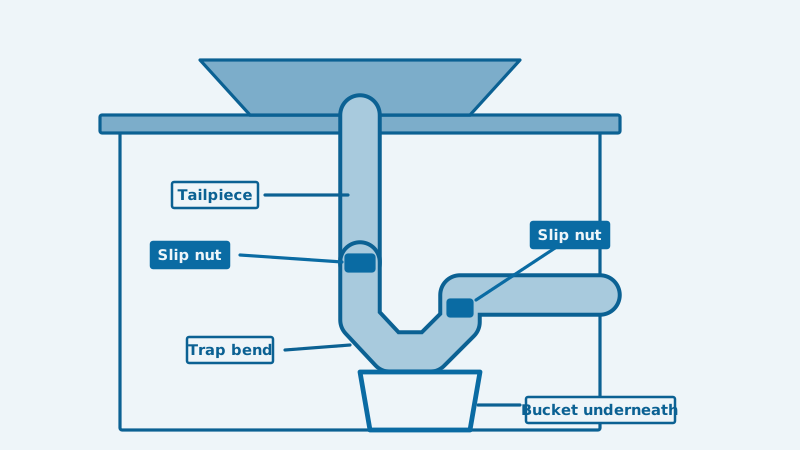
Most slow sinks come down to one of three things: a greasy or hair-packed trap, a jammed garbage disposal outlet, or a blocked vent that stops air getting in behind the water. Work out which by watching how it drains, then use the matching fix below. If you also want the broader picture, our guide to kitchen and bathroom sink drains covers cleaning and upkeep in more detail.
How to fix a clogged sink?
To fix a clogged sink, first find out how bad it is. A sink that drains slowly has a partial clog, usually in the trap. A sink with standing water has a full one. Plunge first, then take the trap apart, and use a hand snake only if the trap is clear.
Before you start, clear everything out from under the sink and put a bucket in place. Then follow this order:
- Plunge. Block the overflow hole and the second basin if there is one, then plunge firmly with a cup plunger.
- Pull the trap. Loosen the slip nuts on the curved pipe under the sink by hand or with pliers. Empty the water into the bucket, then rinse the trap out in another sink and scrape out the sludge.
- Check the wall pipe. Shine a torch into the pipe going into the wall. If you see build-up, a snake can reach it.
- Reassemble and test. Hand-tighten the nuts, run water, and look for drips.
Match the symptom to the likely cause:
| What you see | Most likely cause | Try this |
|---|---|---|
| Slow from the start, same every day | Grease and soap film in the trap | Pull and clean the trap |
| Normal, then standing water | Solid clog or dropped object | Plunge, then snake |
| Gurgles and drains in gulps | Air is not getting in, a vent problem | Check the vent, see below |
| Two sinks slow, or the tub too | Shared drain line | Call for a camera look |
How can I unclog my kitchen drain?
Turn off the garbage disposal, plunge the kitchen sink with the other basin blocked, and clean the trap. Grease is the usual cause, and it sets hard once it cools. If a disposal is attached, check whether the outlet is jammed, since many kitchen backups start there, not in the wall pipe.
A kitchen drain takes a different kind of abuse than a bathroom one. It gets cooking fat, coffee grounds, starchy food, and eggshells. Fat cools in the trap and builds a waxy lining that catches everything else.
With a garbage disposal:
- Switch the unit off, and unplug it if you can reach the plug.
- Look for a jam by turning the disposal's hex-key socket under the unit.
- Check the outlet pipe for packed food, which is the most common culprit.
- Do not put your hand in the disposal.
Without a disposal, a double-bowl kitchen sink:
- Block one drain with a wet cloth so the plunger pressure goes to the other.
- Run hot tap water with a squirt of dish soap afterward to soften the remaining fat.
When you want the kitchen-specific price and method, see kitchen drain cleaning cost. A long, greasy run is often easier to clear with a cable machine, which is covered in drain snaking.
How do I unclog my bathroom sink or basin?
Lift the pop-up stopper, which is where hair and toothpaste gather, and clean it. Then clear the trap. For a bathroom basin, the stopper linkage behind the faucet often catches more than the pipe does. Reach it by loosening the pivot nut under the sink.
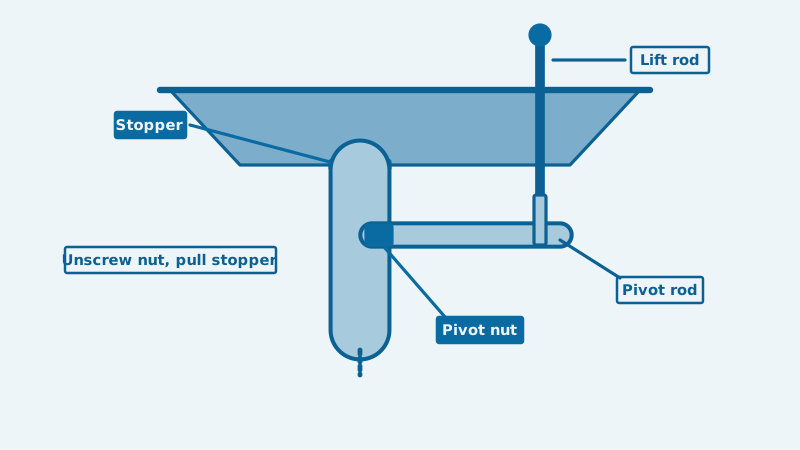
Bathroom sinks clog from hair, soap, toothpaste and lotion. The clog usually forms around the stopper rod, a few inches down.
- Remove the stopper. Many pull straight up. Others need the rod's clip unfastened under the sink.
- Pull out the hair with a bent wire or a barbed plastic strip.
- Rinse with hot water and run the tap for a minute.
- If water stands, pull the trap as above.
Two other causes are worth considering. First, a basin with no clog in the trap that still gulps usually has a vent problem. The sink drain needs air from a vent pipe to flow, the same as a bottle needs air to pour. If you hear gurgling and the water drains in bursts, a blocked vent can be the cause. A clogged drain vent is a roof job and often a job for a professional. Second, if the basin drains slowly even with a clean trap and stopper, the blockage is in the wall pipe. See how to unclog a basin for that case.
How do I clean a bathroom basin drain without a clog?
Clean the stopper and the upper few inches of the pipe monthly. Pour hot water down after cleaning the stopper, and use a cup of baking soda followed by a cup of vinegar for light film. This keeps slow drains from forming. It will not clear an existing clog.
Understanding what builds up helps, whichever kitchen sink drain or basin you are cleaning. In a bathroom, it is hair and soap. In a kitchen, it is fat and food. In this section of pipe, the first few inches matter most. Hard water leaves a mineral crust on the inside of the pipe, so debris sticks more easily. A monthly routine of lifting the stopper and flushing with hot water is enough for most households.
Keep commercial drain cleaners apart from each other and from bleach or acids. If fumes bother you, step outside and ring Poison Help on 1-800-222-1222.
How much does it cost to unclog a sink?
A DIY fix costs a plunger or a hand snake from a hardware store, usually a small cost. A professional clearing of a single sink line is a smaller job than a main line, and local businesses publish prices that vary by method and access. Ask for a written price before work starts.
The price depends on a few things:
- Which fixture. A kitchen sink with a long greasy run usually costs more than a bathroom basin.
- How far the clog is. A trap clog is a short job. A clog deep in the wall needs a cable machine.
- Access. Wall-hung sinks, cramped cabinets and no nearby cleanout add time.
- Time of day. Evening and weekend calls often cost more.
For typical ranges in Los Angeles, see drain cleaning cost. A written price for your own sink comes from the quote page, and we'll line up a local drain cleaner to come and look. The rest of what we cover is listed on our home page.
Questions people ask
Does Dawn dish soap unclog drains?
Dish soap helps with grease, not with a solid clog. Squeeze a generous amount into the drain, follow with hot tap water, and give it ten minutes. It can loosen a fatty film in a kitchen sink. It will not break up hair or a dropped object, so move on to a plunger or snake if the water still stands.
What's the strongest thing to unclog a drain?
A mechanical tool, such as a snake or a cable machine, is the strongest and the safest. Chemical cleaners are strong but can splash, damage fittings, and leave harsh liquid sitting in a blocked pipe. For a sink, the strongest reasonable DIY is a pulled trap and a hand snake.
What should I do if my RV sink is draining slowly?
Start the same way: clean the strainer and the trap. RV sinks have small-diameter pipes and a short run to a gray water tank, so grease and food particles cause trouble fast. If the tank is nearly full, the sink will drain slowly regardless, so check the tank level before you dismantle anything.
Why is my sink draining extremely slowly after I cleaned the trap?
The blockage is probably past the trap, in the wall pipe, or the sink is missing air from a blocked vent. Try a hand snake through the wall pipe. If that does not help, or if other fixtures are slow, a camera look at the line is the next step.
Sources used
Page updated