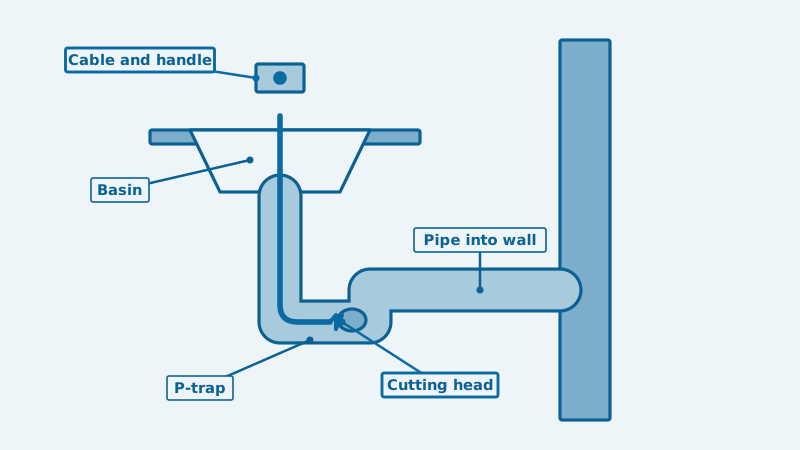
To snake a bathroom sink drain, use a small hand auger with a 1/4 inch cable, feed it into the wall pipe after removing the trap, or down through the drain opening if the stopper lifts out. Turn the handle clockwise as the cable meets resistance, then draw it back with whatever it caught. Going in through the wall pipe is the safer route for the cable. The sink drain overview shows where snaking fits among the other fixes.
What kind of snake should I use on a bathroom sink?
A hand-cranked auger with a 1/4 inch cable and a length of 15 to 25 feet is the standard choice for a bathroom sink. Wikipedia notes that hand augers suit sinks and bathtub drains, while a motorized drum auger can damage plastic pipe and copper tubing if misused. A power drill attachment is more than a basin needs.
Cheaper options exist: a flat plastic strip with barbs, usually 18 to 24 inches, reaches the first bend. It is a good first tool because it cannot scratch metal and removes hair at the stopper.
Avoid a coat hanger past the trap. It can bend, snag and leave a broken tip in the pipe. A purpose-made cable has a coiled head designed to hook, not stab. Choose a cable that is clean and unrusted, because grit in the coil scratches a chrome pipe.
Should I snake through the stopper opening or through the wall pipe?
Through the wall pipe is cleaner for the cable, because it skips two sharp turns. Remove the trap, point the cable into the horizontal arm in the wall, and feed. Through the stopper opening works if the stopper lifts out, but the cable has to bend through the tailpiece, the trap and the arm.
A pop-up stopper complicates the drain opening. A rod runs through the tailpiece, so the cable cannot pass until the stopper is pulled and the rod is moved aside. Many sink strainers have a crossbar or a small flange that catches the cable too.
If you only need to clear the first section, use the opening. If the sink is slow beyond the trap, use the wall. Our guide to cleaning the trap explains how to take it off without leaks. Taking the trap off also lets you see what has been catching, which is information a cable does not give you.
How do I snake a bathroom sink drain step by step?
Work slowly, keep the cable straight and do not force it past a bend. A bathroom sink takes about twenty minutes the first time, and most of that is removing and refitting the trap. The six steps below start with the trap off, since the wall pipe gives the cable its straightest run.
- Place a bucket under the trap and unscrew the slip nuts by hand.
- Pull the trap off and clean it out.
- Slide the cable end into the open wall pipe, with the drum a foot from the opening.
- Push until you feel resistance, then turn the handle clockwise and push gently.
- When it bites, turn a few more times and pull the cable back.
- Repeat until it moves freely, then refit the trap and run hot tap water.
RIDGID's manual for a hand-crank model says to keep the cable end inside the drain before you start and to send it at least 12 inches in. Do not leave a loop of cable between the drum and the opening. A loop kinks, and a kinked cable can spring back.
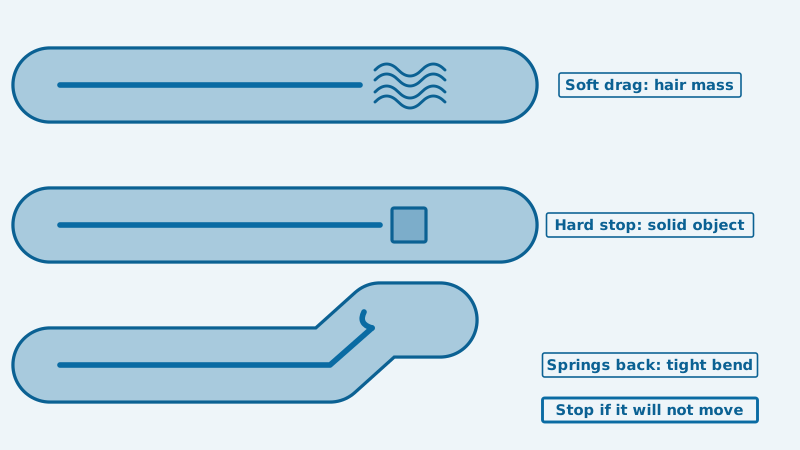
Keep the tool moving; if the cable stops turning and you keep cranking, it winds up tight and then springs loose.
What will the cable feel like when it hits something?
A soft clog feels like resistance that gives way after a few turns: hair, soap or a grease plug. The handle slows, then lightens as the cable breaks through. A hard stop that does not change is a bend, a joint or a hard obstruction such as a lost screw or a jar lid.
A grinding or scraping feel with a metallic sound usually means the cable is rubbing on a pipe wall or a fitting. Back out a few inches and reduce the push.
When you pull the cable back, look at what is on it. Dark slime and hair means a soft clog. Rust flakes or chips of scale suggest an old metal pipe, and you should stop there. If nothing comes up but the sink is still slow, the clog may have been cleared and the pipe may be coated, or the restriction may be beyond your cable's reach.
Understanding what the cable tells you saves repeating the job. Note how far the cable went when it hit the clog, since that helps the next person.
What can go wrong when snaking a sink?
The common mistakes are forcing the cable past a bend, using too much power, and scratching a chrome or plated pipe. A rough cable can cut into a plastic trap, and a stuck cable can wrench a loose joint apart.
Do not use a drill-powered or machine snake on a bathroom sink unless you know the pipe is sturdy and large enough. Do not snake through a garbage disposal. On a kitchen sink the cable has to go through the trap arm, not through the disposal, which has blades.
Drain cleaners are strong alkalis that can cause chemical burns, and cleaning products should be kept apart. If a chemical was used first, wear eye protection and gloves before you put your hands anywhere near the trap, because the water may burn. For longer horizontal runs and kitchens, snaking a kitchen sink drain covers the differences.
Is snaking better than a plunger or a cleaner?
For a hair-and-soap clog under a bathroom sink, a hand auger is usually the most effective step, because it removes the clog rather than moving it. A plunger helps with a clog right at the stopper but can push debris farther. Chemical cleaners are slower and carry safety risks.
Think of it as a ladder: pull the stopper and hook out hair, clean the trap, then use a cable. If each step makes no difference, the blockage is outside what home tools can reach. The sink drain slow guide covers other causes, and drain snaking explains what a full machine visit does.
Consider the age and material of the pipe before you decide. A fragile, corroded section is a reason to hand the work to someone with the right tools.
When should I call someone instead of snaking it myself?
Call when the cable stops at the same point twice, when you see rust or flakes on the cable, when the sink drains and then backs up again, or when other fixtures are slow. Also call if you cannot remove the trap or the pipe under the sink is badly corroded.
We'll arrange a visit from a local drain cleaner with a machine or camera, and the quote is written and agreed before the cable goes in. Basic fixture work is often a short visit, and the ranges are on our drain snaking cost page. To start, use the price request page and note what the cable did. You can also go back to the LA Drain Works home page to see what else we arrange.
Questions people ask
Can I snake a sink drain without taking the trap off?
Yes, if the stopper lifts out, but it is harder. The cable has to pass the tailpiece, the trap and a sharp bend, and it can kink. Taking the trap off gives a straight run into the wall and lets you see what has been catching. Use the opening as a first try.
How far should I push the cable into a sink drain?
Usually 5 to 15 feet is enough for a bathroom sink, because the branch line is short before it meets a stack or a larger line. Stop when you feel the cable stop in open pipe, which often means you have reached the larger line. Do not force it farther.
Is it safe to use a drill-powered snake on a sink?
It is not recommended for a bathroom sink. A powered cable spins fast and can scratch or crack a small pipe, particularly plastic. A hand auger gives control. If you do use a drill unit, run it slowly and stop if the cable binds.
What should I ask a drain cleaner about a sink job?
Ask whether the price covers removing the trap, a cable run into the wall and a leak test. Ask for the quote in writing before they begin, and what they do if the sink clogs again. Someone who cleared a basin last week can answer in a sentence.
Does an adult need to be at home for the work?
Yes, someone should let them in and name the sink that is slow. Empty the cabinet under the basin so the trap is reachable. Hovering is not necessary, but being close lets you answer questions as they work, such as when the slowness started and what you have already poured down it.
Sources used
Page updated