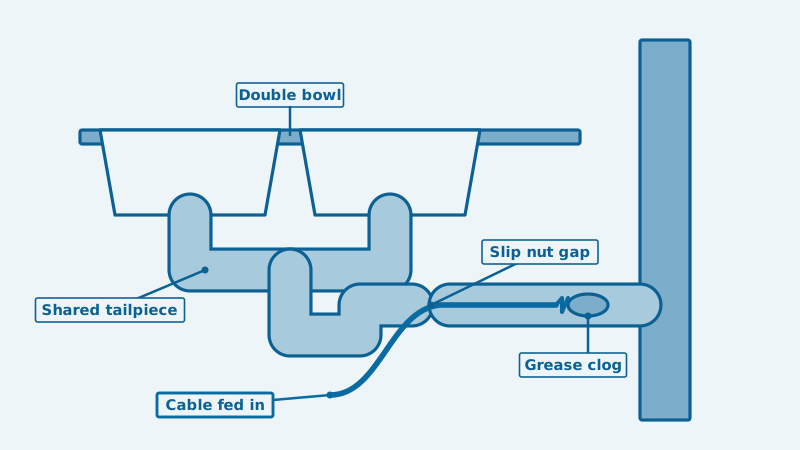
Snake a kitchen sink drain by removing the trap, or the cleanout if there is one, and feeding a 1/4 inch hand auger into the wall pipe, not through the garbage disposal. Kitchen clogs are usually grease, soap and food paste, so expect a slick, waxy plug. A double sink with a disposal needs one extra check before you start. Our sink drain guide lists every fixture; this page is about the kitchen.
Why does a kitchen sink need a different approach from a bathroom sink?
A kitchen drain carries cooking fat, food particles and detergent, which cool and bind into a dense plug. A bathroom drain carries hair and soap. Kitchen lines are also longer, often hold a disposal and a dishwasher connection, and sit lower in the cabinet.
LA Sanitation puts roots and poured grease behind more than half of sewer backups, and the grease part starts in kitchens. Fat that goes down hot looks harmless, but it sets on the pipe wall a few feet along.
The practical result: a kitchen cable often brings up a greasy rope and the pipe needs a hot-water flush after. A hand auger works, but scrub the trap first, because the heaviest debris sits there. Our guide to snaking a bathroom sink covers a hairier, tighter pipe; the principles are similar but the clog is different.
How do I snake a kitchen drain step by step?
Start by turning off the disposal at the wall switch and, for safety, at the plug if you can reach it. Put a bucket under the trap and clear the cabinet so you can work comfortably. Then follow the sequence below, and consider calling someone if the cable stops at the same place twice.
- Unscrew the trap and empty it into the bucket.
- If there is a cleanout fitting on the line, open it instead of working through the trap.
- Feed the cable into the wall pipe and push until resistance.
- Turn the handle clockwise to bore into the clog, then pull back slowly.
- Repeat until the cable runs free, then refit and flush with hot tap water.
Never feed a cable down through a disposal. The blades can catch it, and the cable can scratch or break the grinding chamber. Go through the trap arm instead.
RIDGID's manual says to keep the drum close to the opening and to avoid letting loops form. The same applies to a hand unit on a kitchen line, which can run 10 or 20 feet before it meets the stack.
What if I have a double kitchen sink that is not draining?
A double sink usually shares one trap, with a tailpiece from each bowl joined by a tee. If the water stays in both bowls, the clog is at or after the tee. If only one bowl is slow, the clog may sit in that bowl's tailpiece or the disposal connection.
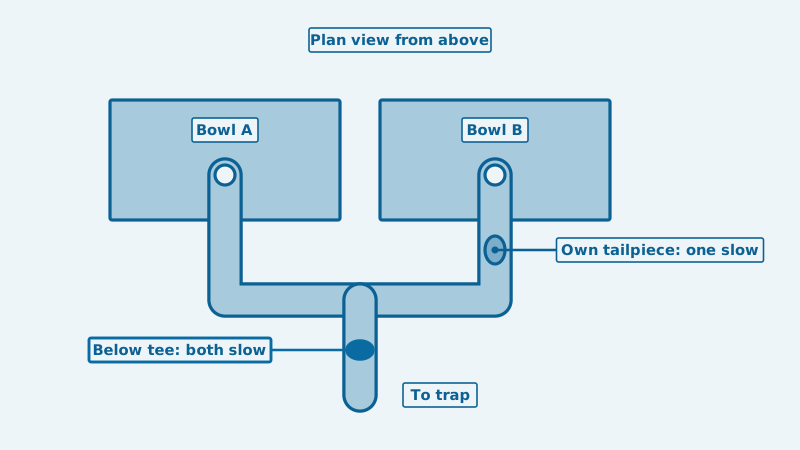
Test it: fill one bowl and pull the plug. If the other bowl starts to rise, the two are connected and the blockage is below the tee. If the water simply stays, the problem is beyond the shared section.
A disposal on one bowl adds a second path. If the disposal is full of food paste or its outlet is clogged, the other bowl drains through it. Clear the disposal outlet and the connecting pipe before you push a cable, since the cable can get stuck on the baffle.
Dishwasher connections matter too. A dishwasher drain hose that joins at the disposal or the tailpiece can leave a kitchen sink that fills when the dishwasher runs. If that happens, the blockage is below the connection point.
Why is my water not draining from the sink but no blockage is visible?
Water that sits with nothing to see usually means a blockage that is out of view or a vent that has stopped working. The trap may be full of grease paste, which looks like nothing from above. A closed or kinked dishwasher hose or a clogged air gap can also hold water in the sink.
Check the basics in order: lift the stopper, check the trap, look at the disposal and the dishwasher loop, then run the cable. If the water still sits, a partly blocked vent can make the drain glug and stall. A related page, why a sink drains slowly, goes through the diagnostics.
The same logic applies for a bathroom sink that drains slowly with no blockage. There the stopper linkage and a coated tailpiece are bigger suspects; see bathroom sink won't drain but not clogged for that case.
What goes wrong when snaking a kitchen drain?
The main problems are forcing the cable through a bend, damaging a thin metal trap, and leaving grease behind that re-forms the clog. A cable can also cut a plastic trap or loosen a joint, and a disposal can jam if a cable touches the blades.
Grease is the repeat offender. A cable bores a hole through the plug, so water flows again, but a coat of fat stays on the pipe walls. A hot-water flush after the cable melts some of it. If the kitchen clogs again within weeks, the line needs a stronger clean such as jetting. Read hydro jetting vs snaking to see when that is the better choice.
Chemical openers are tempting, but strong drain cleaners are very caustic, with a risk of burns, and should never be mixed with other products. They also pool in a blocked sink that holds water.
How can I stop the kitchen sink clogging again?
Keep fat out of the drain. Wipe greasy pans with a paper towel before washing, let used cooking oil cool, then seal it in a container for the trash. Use a basket strainer to catch food. Run cold water when you use the disposal, and avoid feeding it fibrous scraps.
A monthly hot-water flush from the tap helps keep a light film from building. For a persistent problem, a professional visit to clear the full branch is more effective than repeated cable runs. See kitchen drain cleaning cost for ranges.
When should I call someone to snake my kitchen drain?
Call when the cable stops at the same point twice, when the sink clears and then backs up again, when the dishwasher or a laundry line shares the drain and is also slow, or when you cannot remove the trap. Also call if the pipe is metal and badly corroded.
For a longer kitchen run, we'll arrange a local drain cleaner with a machine, and the quote is in writing before the work starts. Send your details via the price request page and say whether you have a disposal or a dishwasher. The LA Drain Works home page shows the other jobs we arrange across the city.
Questions people ask
Can I snake a kitchen sink with a garbage disposal?
Yes, but go in through the trap arm or a cleanout, not through the disposal. The blades can catch the cable and damage both. Switch the disposal off at the wall first, and keep your hands out of the chamber. If the disposal itself is jammed, free it before you snake.
How long is the cable I need for a kitchen sink?
A 25 foot hand auger covers most kitchens. The run from the trap to the main stack is often shorter than that, but the extra length lets you push past a bend. If the cable runs out and the clog is still there, it is a job for a machine.
Will boiling water clear a greasy kitchen drain?
Boiling water melts some fat but can soften plastic pipe, which has a lower working temperature. Hot tap water is safer. The melted grease can also move down the pipe and set again further along, so it is not a lasting fix.
What should I ask before someone snakes my kitchen line?
Ask whether they will use a cleanout or the trap arm, avoid the disposal, and flush the pipe with hot water after. Ask for a written price first, and how they deal with grease that comes back. Mention the disposal and dishwasher when you book.
Should I be there when the kitchen drain is snaked?
Yes, an adult should open the door and show the sink. Empty the cabinet beneath it first. You need not hover, but stay near enough to say how the disposal and dishwasher are connected, since that changes where the cable goes in.
Sources used
Page updated