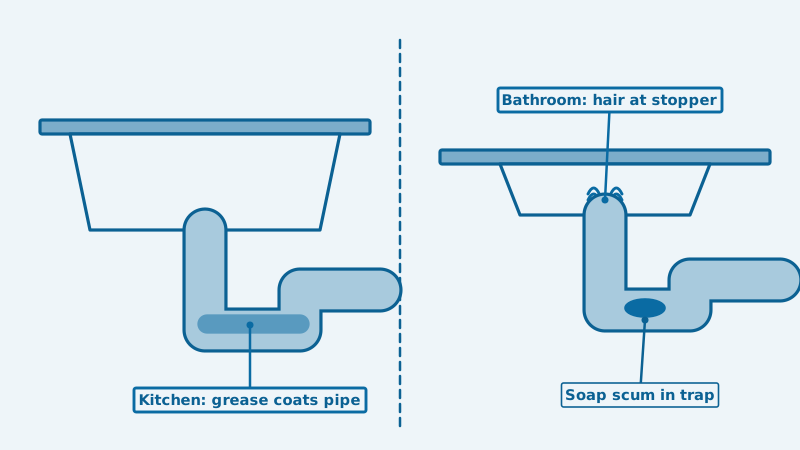
Slow draining is the early warning for a clog, and it is cheaper to deal with now than after the water stops. The cause depends on the sink. A kitchen sink slows because of grease, food and the garbage disposal. A bathroom sink slows because of hair, soap and toothpaste caught on the stopper and in the trap. If the sink is slow and nothing seems to be blocking it, the cause may be a partly blocked vent or a line shared with other fixtures. For the full set of options see our basin drain cleaning page.
What makes a kitchen sink drain slowly?
Grease and food. Fat poured down the drain cools and sticks to the pipe wall, and every scrap of food that follows catches on it. Over months the opening shrinks like a clogged artery. A garbage disposal grinds the food finer but does not stop grease from coating the pipe.
Other kitchen causes:
- Coffee grounds and eggshell fragments that settle in the trap.
- Starchy food, such as rice and pasta, that swells and gums up.
- A dishwasher that drains into the same trap or disposal and adds soap and food bits.
- A disposal with a clogged inlet or a jammed flywheel.
- Hard water scale that builds up inside older metal pipe.
If your kitchen drain smells as well as drains slowly, the grease layer has probably started to rot, which is a sign the pipe needs a proper clean, not just a splash of hot water. Our page on kitchen drain cleaning cost shows what a professional visit typically involves.
Why is my bathroom sink draining slow?
Hair, toothpaste and soap. Hair wraps around the pop-up stopper and the pivot rod, then catches soap scum and forms a mat. A bathroom sink pipe is narrow, about an inch and a quarter in most homes, so a small amount of buildup makes a big difference.
Bathroom sinks also slow because of:
- A stopper that no longer lifts all the way, so it sits partway across the opening.
- Toothpaste and shaving residue that harden in the trap.
- Mineral scale where the water is hard. LADWP says hardness varies across the city, from roughly 5 to 16 grains per gallon depending on the area, and scale can narrow metal pipe over the years.
- Makeup, lotions and oils that coat the pipe wall.
Because the cause is usually hair on the stopper, bathroom sinks are the easiest to fix yourself. Our guide to fixing a slow draining sink walks through it step by step.
How do I find out where the blockage is?
Fill the sink halfway and let it drain while you watch. If it drains slowly from the start, the blockage is near the top: the stopper or the strainer. If it begins fast and slows near the end, it is further down, in the trap or beyond. If other fixtures nearby are slow too, it is in the shared line.
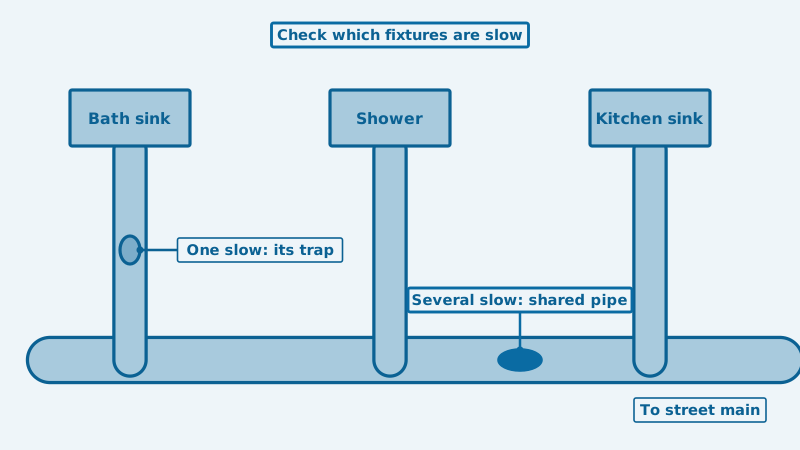
Here is a quick way to sort it out:
| What you see | Where to look |
|---|---|
| Slow from the first second | Stopper, strainer, disposal inlet |
| Fast, then slow at the end | P-trap or the pipe just past it |
| Gurgling as it drains | Partial blockage or vent problem |
| Sink and tub both slow | Shared branch line |
| Several fixtures slow plus a smell | The main line |
If the water level on both sides of a double kitchen sink rises together, the clog is past the point where the two sides join.
What can I do myself before calling someone?
Start with the stopper, then the trap, then a hand tool. Remove the stopper and clean it, put a bucket under the trap and unscrew it, rinse it out, and reassemble. A small plastic drain tool or a hand-cranked drain snake can clear the next stretch of pipe. These steps fix most slow bathroom sinks.
Details that matter:
- Take a photo of the pipe layout before you take anything apart.
- Tighten slip nuts by hand and check for drips with a dry paper towel.
- Run hot water for a minute after cleaning, then watch the drain rate.
- For the kitchen, run the disposal cleanly with cold water first and keep it off while you work.
Consider the chemical cleaners last, not first. They are a poor first choice. They can sit in a slow drain, damage a worn pipe, and make the next person's job harder. If you want something gentler, see home remedies for a clogged drain, which also explains where they do not work.
Why is my sink draining slow if nothing is blocking it?
If the pipe looks clean and the sink still drains slowly, the problem is often the vent. A drain needs air behind the water, and a blocked or crushed vent pipe makes the water drag, often with gurgling. A trap or branch line that is not sloped properly can also slow flow, as can scale that narrows the pipe without fully blocking it.
The California Plumbing Code requires each trap to have a vent for exactly that reason. You cannot see vents from inside the house, but a sink that drains better with a nearby window open or after another fixture has been used is a hint. Our pages on kitchen sinks that drain slowly with no blockage and the clogged drain vent cover that side in more detail.
When should I call a drain cleaner?
Call when the DIY steps do not help, when the sink drains slowly again within days, when other drains are slow or gurgling, or when there is a sewer smell. Those signs point to a blockage you cannot reach with hand tools, often in the branch line or the main sewer line.
A visit usually starts with a cable or a hydro jet to clear the clog, and a camera if the clog keeps returning. Drain snaking reaches most sink clogs in one visit. If it seems to be a main line issue, we explain the signs in main line drain cleaning.
In Los Angeles, remember that the line out to the street is yours: LA County says the property owner is responsible for the entire private lateral, including the part under the street.
For a written quote on a slow sink, request a price and we'll arrange a visit. You can also see everything we cover on the LA Drain Works home page.
Questions people ask
How long does it take to clear a slow sink?
Cleaning a stopper and trap takes fifteen to thirty minutes. A plumber with a cable can usually clear a sink line in under an hour. A vent fault or a damaged pipe takes longer and changes the quote, so ask for it in writing before anything starts.
What should I ask before I hire someone to clear a sink?
Ask what the price covers, what tool will be used, and what happens if the first try does not work. Ask whether a camera look is available should the clog come back. Get the quote in writing, and be cautious about big promises before the drain has been seen.
Do I need to be home for a sink visit?
Yes, at least on arrival, since the plumber needs to reach the cabinet under the sink and see the problem for themselves. Empty the cabinet of cleaning products beforehand, keep pets away from the work area, and tell the plumber about any cleaner you already poured down the drain.
Is it safe to use drain cleaner on a slow sink?
Use caution. Chemical cleaners can burn skin and eyes, can damage older pipe or fixtures, and release hazardous fumes if mixed. If a cleaner is already in the sink, tell the plumber before they start, because splashing caustic water is a safety risk.
Why does my sink drain slowly only in the morning?
Overnight, residue in the trap settles and softens, so the first use of the day meets a thicker layer. It is a sign of buildup rather than a new fault. A deep clean of the trap and a camera or cable pass if it returns will usually fix it.
Sources used
- California Plumbing Code, Chapter 10 Traps and Interceptors (2016 edition, Lake County copy)
- LA County Public Works, sewer lateral customer information
- Published guides from Southern California drain cleaning businesses, checked November 2026
Page updated